


Manual Lymphatic Drainage
Gentle treatment to support lymphatic flow, recovery and relaxation.
When your body feels heavy, swollen, run down or slow to recover, sometimes the issue is not just tight muscles
— it can be your body struggling to move fluid efficiently.
At Drysdale Remedial Therapies, our Manual Lymphatic Drainage (MLD) treatments use gentle, rhythmic techniques designed to support the movement of lymph fluid through the body. This can help reduce fluid build-up, support recovery and assist the body’s natural waste removal processes.
Unlike remedial massage, MLD is not a deep tissue treatment. It is slow, light and non-invasive, making it ideal for people who may not tolerate firm pressure or who are already feeling fatigued, inflamed or overwhelmed by their symptoms.
What is Manual Lymphatic Drainage?
Manual Lymphatic Drainage is a gentle hands-on therapy that aims to encourage the natural circulation of lymph fluid throughout the body.
The lymphatic system plays an important role in helping the body process and eliminate metabolic waste, excess fluid and toxins. When this system becomes sluggish or overloaded, people may experience swelling, heaviness, fatigue or a general sense that their body is not functioning at its best.
MLD uses light, specific movements to help stimulate lymph flow and support the body’s natural drainage pathways.
How can MLD help?

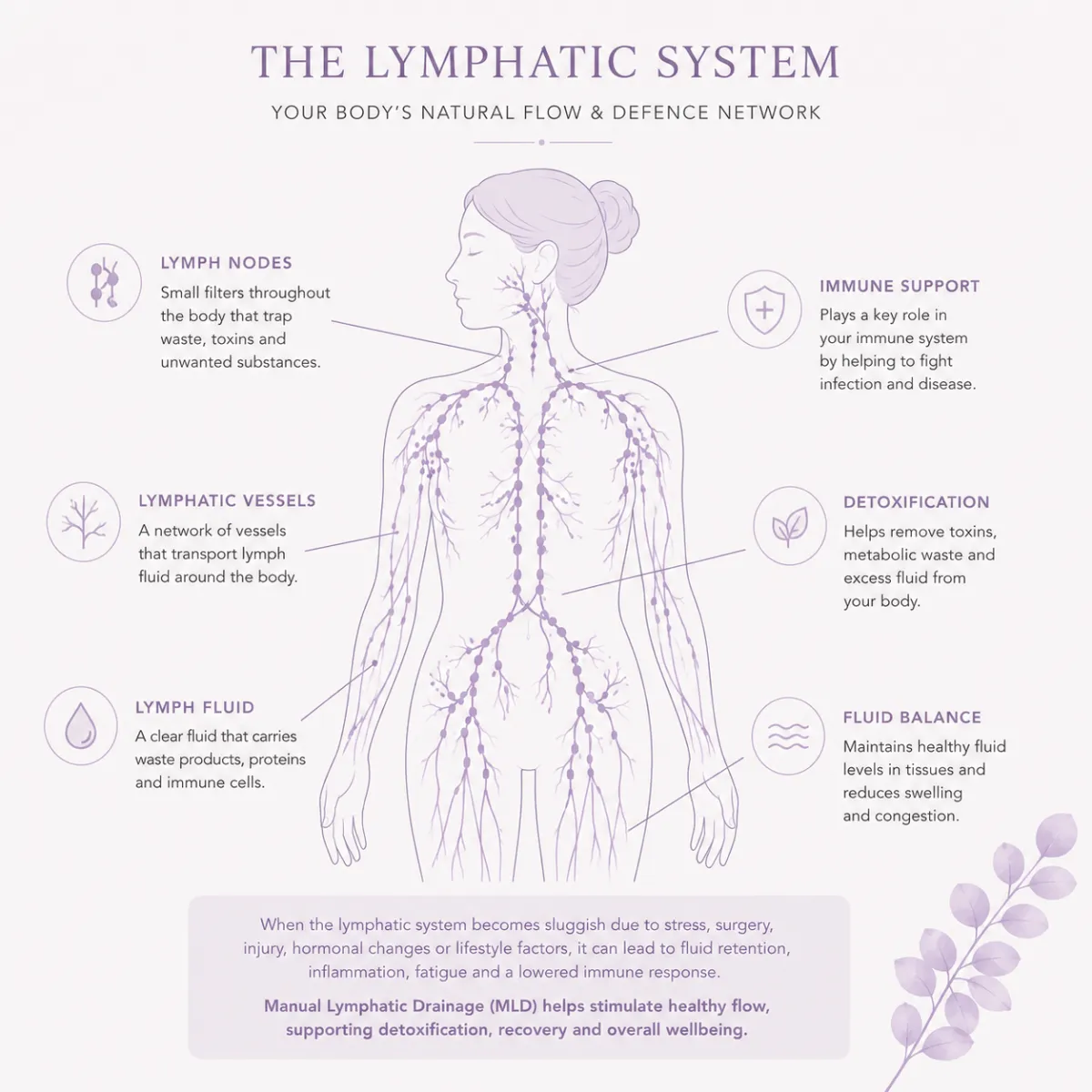
The lymphatic system plays a key role in fluid balance, immune function and the removal of metabolic waste from the body.
When lymphatic circulation becomes sluggish or overloaded, fluid can accumulate within tissues, contributing to swelling, heaviness, inflammation and delayed recovery.
Manual Lymphatic Drainage uses gentle, rhythmic techniques designed to stimulate superficial lymph vessels and encourage the movement of lymph fluid toward the body’s natural drainage pathways.
By supporting lymphatic circulation, MLD may assist with:
- Reducing fluid congestion and mild oedema
- Supporting post-surgical or post-injury recovery
- Assisting tissue healing and recovery processes
- Encouraging circulation and waste removal
- Supporting immune and inflammatory responses
- Calming the nervous system and promoting relaxation
Because the lymphatic and nervous systems work closely together, many clients also experience a sense of deep calm and improved overall wellbeing following treatment.
Who is this treatment for?
MLD may be suitable for people who:
- Feel puffy, swollen or heavy through the body or legs
- Feel run down, sluggish or “stuck”
- Are recovering from illness, surgery or injury
- Experience frequent headaches or migraines
- Feel tight or congested through the chest or sinuses
- Struggle with bloating or digestive discomfort
- Want a gentler treatment approach
- Feel like their body needs support to recover and reset
This treatment is especially popular for people who do not enjoy deep pressure massage, are sensitive to touch, or simply want a calming and restorative treatment for their body and nervous system.
What to expect in a session
MLD is very different to a traditional massage treatment.
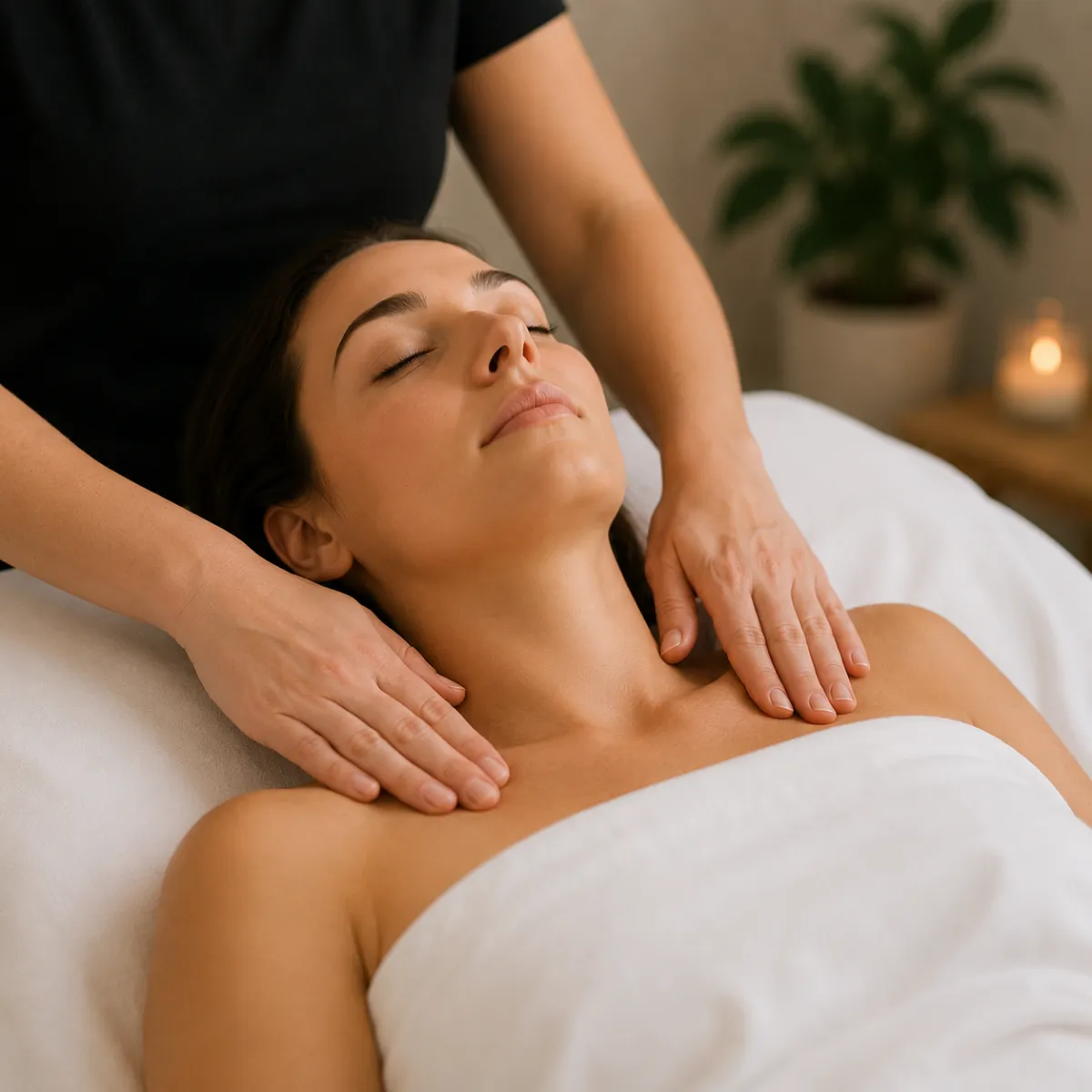
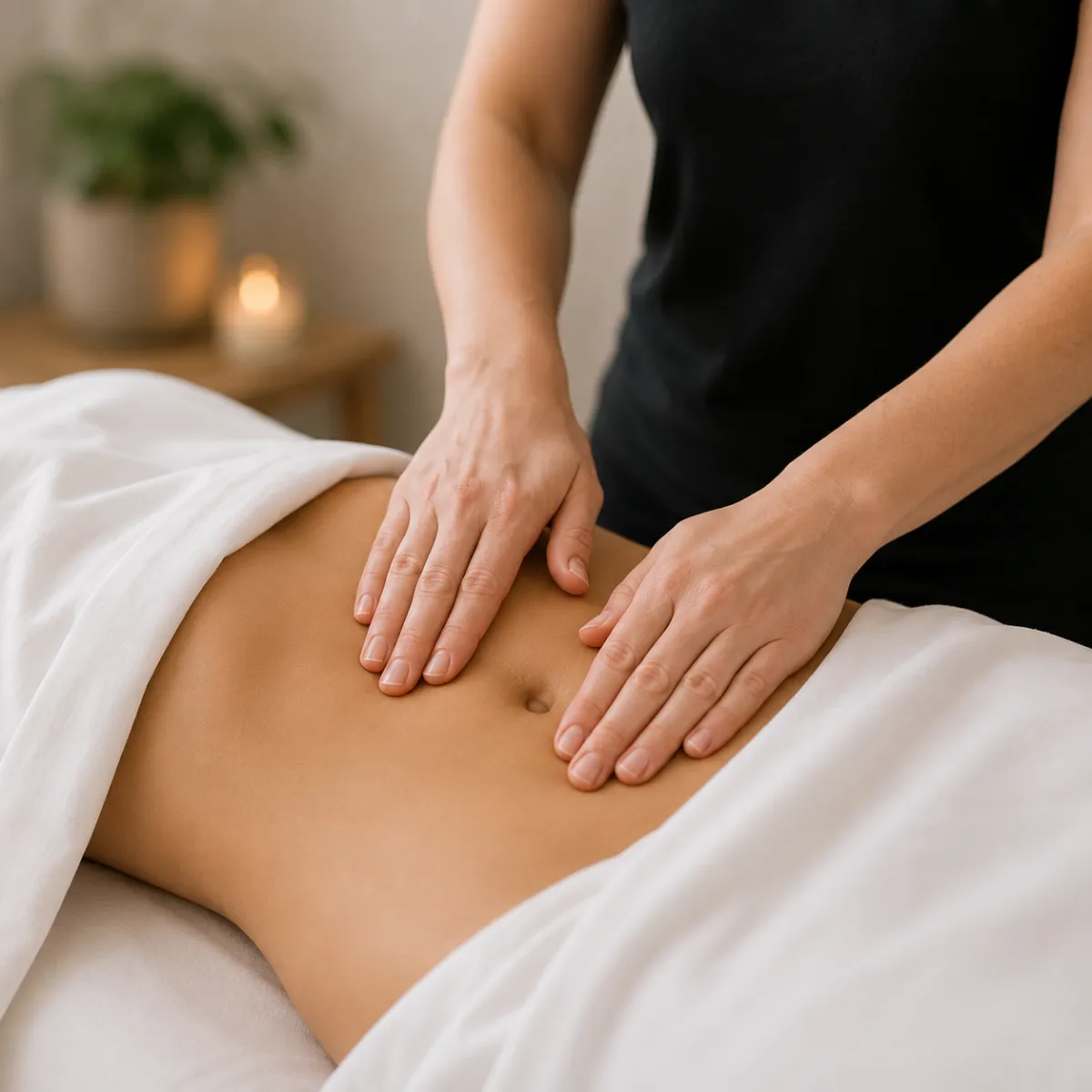
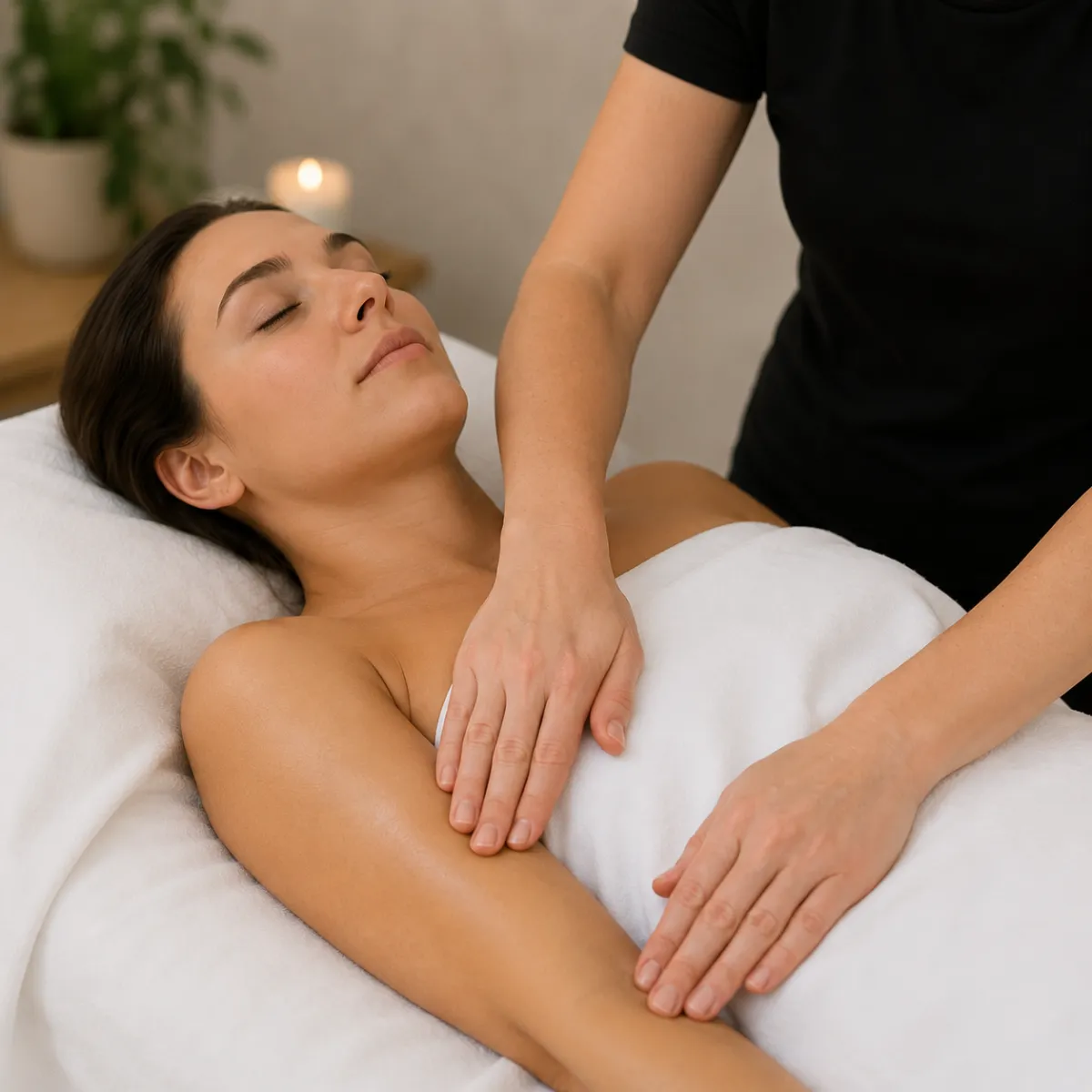
The pressure used is extremely light and gentle, as the lymphatic system sits close to the surface of the skin. The treatment focuses on stimulating lymph flow rather than working deeply into muscles.
Most of the session is performed while lying face up on the table, as many of the body’s major lymphatic pathways are located on the front of the body. Oil is generally not required, as there is minimal gliding across muscles or deeper tissue work.
Many clients find MLD deeply calming and restorative.
Frequently Asked Questions.
How often should I have MLD?
This depends on why you are seeking treatment.
For acute injuries or swelling, treatments are generally spaced at least 4 days apart. For ongoing maintenance or general wellbeing support, sessions may be recommended every 2–4 weeks depending on your goals and symptoms.
Will I feel sore afterwards?
MLD is an extremely gentle treatment, so there should not be pain during or after your session. Most people feel relaxed, lighter or calmer following treatment.
What should I do after my treatment?
Staying well hydrated after your session is important. Drinking plenty of fluids can help support the body’s natural drainage and recovery processes.
Is MLD the same as remedial massage?
No — MLD is a very different style of treatment. Remedial massage focuses more on muscles and soft tissue, whereas MLD focuses on supporting lymphatic flow using gentle, rhythmic techniques. Some clients benefit from combining both approaches depending on their presentation and goals.